Explore Clinical Research
Discover the roles, responsibilities and processes behind clinical trials, and the professionals who make them possible.
Clinical Research Professionals
Clinical Research Professionals (CRPs) are individuals who contribute to clinical research and trials involving human participants. Depending on their role, CRPs may be involved in various aspects of the study lifecycle – from study start‑up and participant recruitment to data management, monitoring, and study closure.
CRPs work across a range of organisations, including pharmaceutical companies, academic or contract research organisations (CROs), and investigator sites.
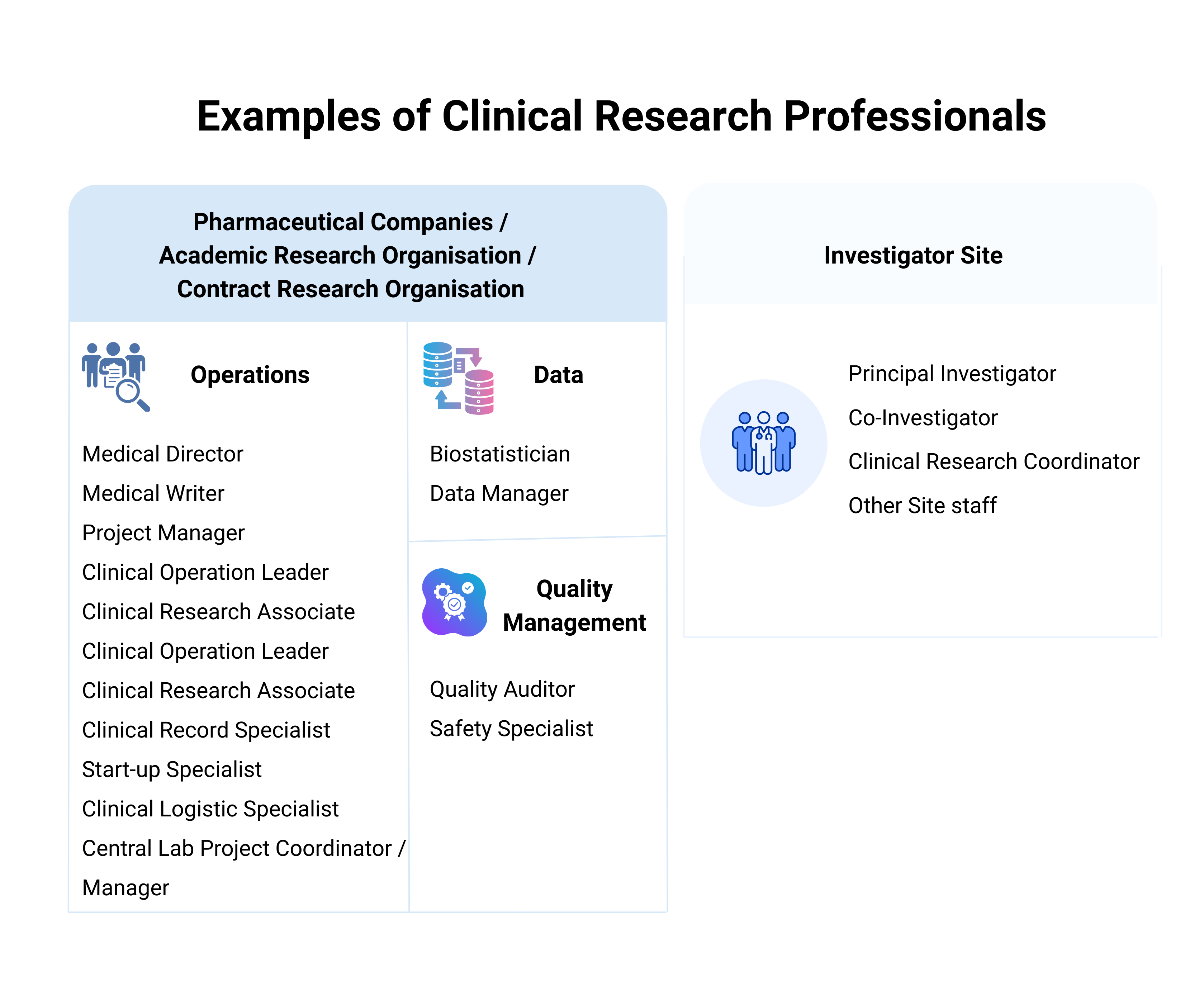
Note: The above list is not exhaustive.
Clinical Research Coordinators
Clinical research fuels revolutionary progress in medicine, pushing patient care to unparalleled heights of excellence. The linchpin of each successful clinical research study is the Clinical Research Coordinator (CRC), ensuring smooth, ethical and efficient conduct of the studies.
A Clinical Research Coordinator (CRC) is a specialized research professional who oversees the day-to-day operations of clinical trials under the guidance of the Principal Investigator (PI). Their responsibilities include but not limited to:
Study Coordination: Managing trial logistics, participant recruitment, data management and collection.
Regulatory Compliance: Ensuring adherence to policies, ethical guidelines, and sponsor requirements.
Stakeholder Liaison: Facilitating communication between investigators, sponsors, site staff and regulatory bodies.
Documentation & Reporting: Maintaining accurate trial records and essential study documentation and ensuring compliance with the relevant policies and regulatory requirements.
CRCs possess strong organizational skills, attention to detail, and effective communication to thrive in this dynamic role.
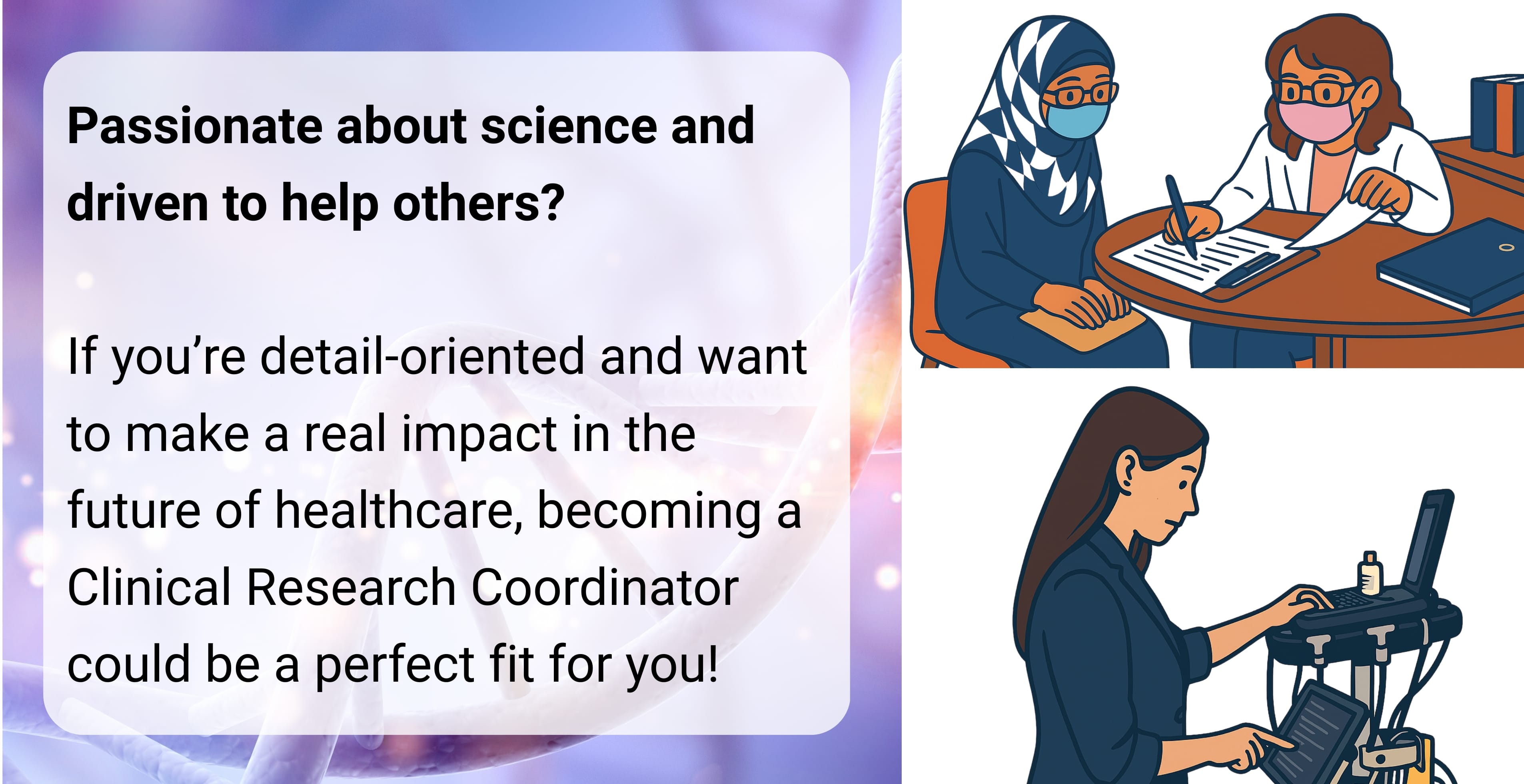
How to become a CRC?
CRCs play a vital role in the conduct of clinical trials and can work across a variety of settings, including hospitals, Clinical Research Organisations (CROs), pharmaceutical and biotechnology companies, and academic research centres.
If you’re ready to take the next step towards a career as a CRC, exploring current opportunities at our public healthcare institutions is a great place to start. Visit their career portals to learn more and kick-start your journey in clinical research:
Qualifications/Requirements
While specific qualification may vary depending on the institution or organization, most CRC positions require a minimum of a Diploma or Bachelor’s degree in a relevant field such as Nursing, Pharmacy, life sciences (or equivalent).
In addition to formal qualifications, CRC roles place strong emphasis on professional competencies. Attention to detail, the ability to manage multiple priorities, and excellent organisational and communication skills are essential. Self-motivation, adaptability, and the ability to learn independently are also important in a dynamic clinical research environment.
Recognition for CRCs Efforts
To recognise the contributions of outstanding Clinical Research Coordinators (CRCs) who have made a significant impact in the clinical research ecosystem, supervisors may nominate eligible CRCs for the Distinguished Contributor Award for Clinical Research Coordinators (DCA-CRC).
Quick Access Links

Tips for creating an Effective CRC Resume
Creating a well-crafted CRC resume is crucial for standing out in the competitive field of clinical research. A clear, targeted resume helps you highlight your strengths, relevant experience, and suitability for a Clinical Research Coordinator (CRC) role. Here are some tips to guide you:
Professional Summary: Start with a concise summary that highlights your expertise, key achievements, and career objectives. This will give employers a quick snapshot of who you are and what you can
Highlight Relevant Experience: Emphasize your experience in clinical research, including specific projects, studies, or trials that you have worked on. Detail your role and contributions to these projects.
Showcase Key Skills: List relevant skills such as data management, participant recruitment, regulatory compliance, and familiarity with clinical trial software. Include any specialised training or certifications you have completed.
Quantify Achievements: Where possible, use numbers of your achievements to demonstrate your impact. Examples can include (but not limited to) number of trials managed, participants recruited, or amount of research funding secured.
Technical Proficiency: List any specific software or tools you are proficient in such as EDC systems, CTMS, or other clinical research applications.
Attention to Detail: Ensure your resume is free from errors, well-organized and tailored to the job you are applying.
To strengthen your resume, you may also wish to include the following details:
Any participant interaction experiences (work or personal)
Any nursing skills (e.g., blood drawing, injections)
Any drug management skills (e.g. dispensation of drug, inventory, drug compounding/preparation)
Previous job experiences which required multi-taskings
Previous job experiences in a healthcare setting
Clinical Trial Investigators
Clinical Trial Investigators serve as the leads of clinical research studies and trials. To build a strong pool of clinical trialists, it is essential to have a clear overview of what a clinical trial involves, the regulatory and ethical requirements for study approval, and the key Clinical Research Professionals (CRPs) who support study conduct.
Explore our introductory e-Learning courses for Clinical Trial Investigators:
The Essentials of Clinical Trials for Investigators (opens in new tab) – Designed for aspiring clinicians or scientists interested in conducting or contributing to clinical trials
Interested in Clinical Research, but Not Sure Where to Start?
Thinking about a future in clinical research but want to explore the field before taking the next step? You’re not alone. Clinical research is a dynamic and rewarding area, and understanding what goes into conducting clinical trials is the best way to determine whether it aligns with your interests.
Our short self-paced eLearning courses in clinical trials offer an accessible and practical starting point – they provide an overview of how clinical research works, the roles involved, and what to expect in real-world settings. If you are keen to explore or start a career in clinical research, our introductory courses are designed to help you gain clarity and confidence as you take your first steps into clinical research.
The Essential of Clinical Trials for Beginners (opens in new tab) – Build a strong foundation and gain a practical understanding of clinical trials